You were never trapped by the weight. You were trapped by your grip.
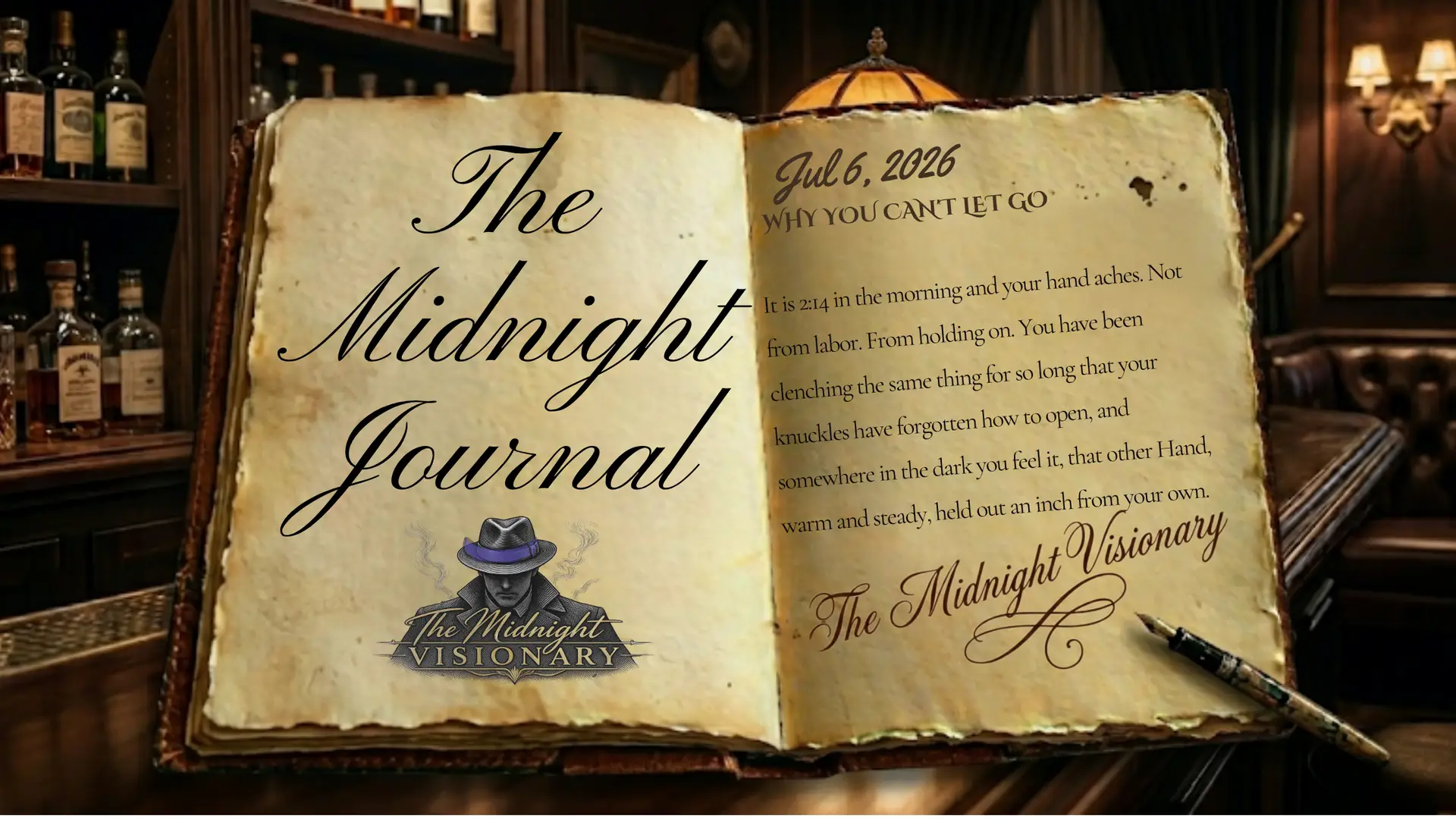
It is 2:14 in the morning and your hand aches. Not from labor. From holding on. You have been clenching the same thing for so long that your knuckles have forgotten how to open, and somewhere in the dark you feel it, that other Hand, warm and steady, held out an inch from your own. It has been there the whole time. You just cannot make your fingers unfold.
I know that ache. I lived in it for four decades.
There is a lie that sounds like wisdom when you whisper it to yourself at night. It says: if I let go of this, I lose everything I built. Everything I survived. Everything I clawed out of Queens sidewalks and closed doors and my own stubborn blood. So you keep gripping. Not because you do not believe God is real. You do. You always will. You grip because letting go feels like betraying the version of you that fought so hard to get here.
But here is what the dark finally taught me. The thing you are protecting is not treasure. It is a ball and chain. And you cannot take God’s hand while both of yours are full.
The Ego That Calls Itself Survival
Your ego does not announce itself as pride. It disguises itself as competence. It says, you have handled everything this far, so handle this too. It says, you know better, you have the scars to prove it. And after forty years of being right often enough to stay alive, that voice sounds exactly like your own good judgment.
That is the trap. When you know you are wrong, the ego does not go quiet. It gets louder. It floods you with reasons. It makes you question the correction itself so you turn your face away from the very Hand reaching to save you. Not because you want to. Because you have been trained to.
The Greeks had a word for this blindness that runs a man into ruin. They called it hubris. It was never simple arrogance. It was the moment a man trusts his own grip over the gods, over the order of things, over grace. And in every Greek story it ends the same way. The wall he built to protect himself becomes the wall he dies behind.
You are not being asked to become weak. You are being asked to stop mistaking your grip for your strength.
The Five Fears Wearing Your Face
Napoleon Hill named six fears, and the deepest five sit right where you already know they live. The fear of poverty. The fear of criticism. The fear of ill health. The fear of lost love. The fear of death. Hill called them the ghosts that walk in the mind and murder ambition before it is ever born.
You told me those exact fears run your thoughts. And in the same breath you told me you believe in God and know there is nothing to fear. Both are true at once. That is not hypocrisy. That is the human condition. You believe with your spirit and you white-knuckle with your hands, because the fear is familiar and the faith is new territory.
Familiar is the drug. The grudge is familiar. The vengeance you crave against the ones who wronged you is familiar. The anger is familiar even as it burns you, because you have carried it so long it feels like a limb. And you already know the truth about it. Seek vengeance and you push yourself away from God. You said it hurts more than anything, that distance. So the question is not whether you know. You know. The question is why the knowing does not loosen the grip.
Because knowing lives in the head. Surrender lives in the hands.
Peter Knew How to Swim
Remember Peter on the water. He steps out of the boat and he walks, actually walks, on the impossible, because his eyes are locked on Christ. Then he feels the wind. He looks at the storm instead of the Savior. And the man who was walking on the sea begins to sink into it.
Here is the detail everyone misses. Peter was a fisherman. Peter knew how to swim. He was in no real danger of drowning. He sank because the fear told him a story more familiar than the miracle he was standing on. The waves did not pull him down. His attention did.
That is your fear of success. You have felt it. You were pointed straight toward the direction God laid out for you, and instead of walking toward it you sabotaged it, because some old wiring said success is more dangerous than failure. Failure you know. Failure is home. Success is a country with no map, and the fear whispered that you did not belong there. So you sank yourself in water you knew how to swim in.
The rich young ruler did the same thing. He came running to Jesus, knelt in the road, asked how to inherit eternal life. And when the answer was let go of the one thing you are gripping, he walked away grieving. He wanted God. He just wanted his grip more. He is the saddest man in Scripture because he was one open hand away and could not do it.
The Freedom on the Other Side of Ruin
You told me the rest, and it is the whole gospel in one sentence. Once you lost everything you believed you needed to hold on to, you were finally free to grab God’s hand. It was there. Waiting. The whole time.
That is the secret hidden inside every collapse. The losing was not the punishment. The losing was the prying open. As long as your hand was full of the ball and chain, it could not be full of anything else. Grace could not get in because there was no room. Sometimes the mercy of God looks exactly like the moment the thing you clutched gets taken, and your empty hand, for the first time in forty years, is finally shaped to hold His.
So why is it so hard to change direction? Because you are not letting go of everything you built. You only believe you are. You are letting go of the weight that was pulling you under while you insisted it was keeping you afloat. Jacob wrestled all night and walked away renamed and limping, and the limp was proof, not defeat. You do not lose your history when you surrender. You lose the chain and keep the man.
The Midnight Move
Tonight, name the one thing your fist is closed around. Say it out loud in the dark. The grudge with a face. The plan you are terrified to release. The vengeance you rehearse. Name it, and then physically open your hand, palm up, and say six words: God, I trust Your grip more.
Not tomorrow. Tonight. One hand. One name. One open palm. That is the whole distance between the ball and chain and the hand that has been waiting the whole time.
What’s forged at midnight cannot be broken by the dawn.
— Gabriel Vangelatos, The Midnight Visionary